Aktau
Where the Caspian Sea Meets Mars-Like Deserts
Last reviewed on 29 September 2026

Aktau, Kazakhstan's only Caspian seaport, exists as an unlikely oasis in the Mangystau desert. Built from scratch in 1961 to support uranium mining, this planned Soviet city has evolved into Western Kazakhstan's hub and the gateway to some of Earth's most otherworldly landscapes.
The city itself offers an intriguing mix: modernist Soviet architecture, beach resorts along the Caspian, and a unique numbered district system instead of street names. But Aktau's real draw lies beyond—the Mangystau region's underground mosques, dramatic canyons, and surreal rock formations create a landscape that feels more like Mars than Earth. This is Kazakhstan's adventure frontier, where ancient Silk Road heritage meets raw geological wonder.
Where is Aktau?
Aktau (also written Aqtau) is in far western Kazakhstan, on the eastern shore of the Caspian Sea at 43.65°N, 51.16°E. It is the capital of Mangystau Region and sits on the Mangyshlak Peninsula, roughly 2,000km west of Almaty and 1,700km south-west of Astana in a straight line, and a great deal further by road — far enough that virtually every visitor arrives by air. The city itself stands 22 metres below sea level, and the Karagiye Depression just inland drops to −132m, the lowest point in Kazakhstan.
In practice that means Baku, about 370km away across the water, is nearer than any major Kazakh city except Atyrau. It is a flight of roughly an hour from Baku, about 3 hours from Almaty and 2.5 hours from Astana. The city runs along a low limestone cliff above the sea, so there is no old town to find: you orient yourself by the coastal promenade and the numbered microdistricts behind it.
City Attractions
Caspian Sea Beaches
Aktau's coastline stretches for kilometers, offering both developed beach clubs and wild stretches of sand. The water is less saline than oceans but saltier than most seas. Summer temperatures reach 25-27°C, perfect for swimming from June to September. Popular beaches include Dostar (equipped with facilities), Nur Plaza Beach (upscale with entry fee), and wild beaches north and south of the city.
Much of the city shore is rocky rather than sandy, which is why the good beaches are either managed resort strips (paid entry or a sunbed charge) or wild stretches a short taxi ride outside the city. Water is warmest from mid-July to the end of August; June and September are pleasant but noticeably cooler, and outside that window the Caspian is for looking at rather than swimming in. Strong onshore winds can make the sea choppy on otherwise hot days.
Note: the Caspian has been falling for years, so beaches, jetties and the shoreline itself change from one season to the next. Ask locally which stretches are clean and open before you go.
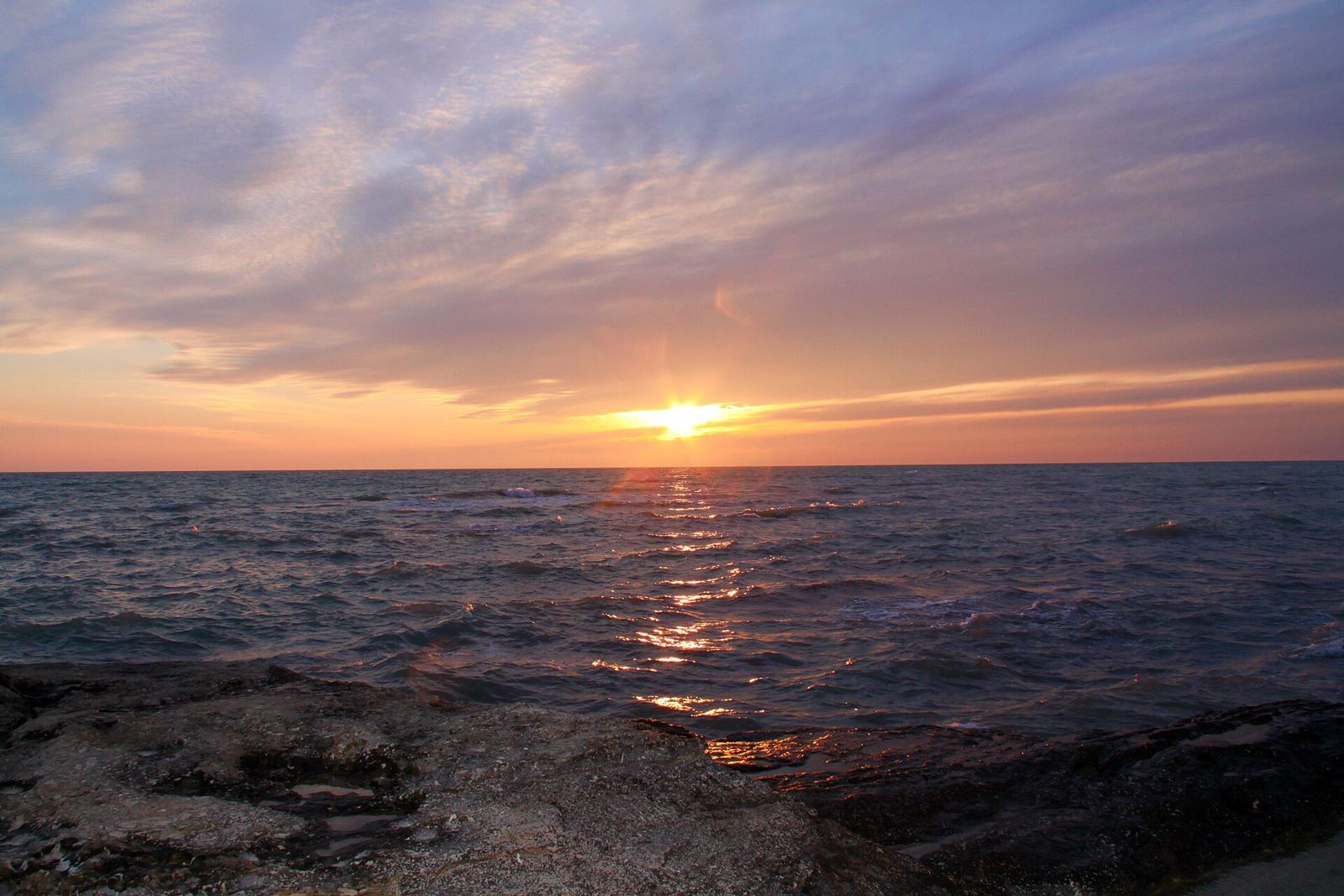
MiG-21 Monument
This decommissioned fighter jet mounted on a pedestal has become Aktau's most recognizable landmark. Located on the coastal promenade, it commemorates military aviation history and offers a popular photo opportunity with the Caspian as backdrop.
Location: Microdistrict 9, coastal boulevard
Aktau Lighthouse
Though the modern lighthouse isn't open to visitors, the surrounding area offers excellent sunset views and a pleasant seaside promenade. The rocky coastline here contrasts with the sandy beaches elsewhere.
Regional Museum
Comprehensive exhibits covering Mangystau's unique history: ancient civilizations, Silk Road trade, underground mosque traditions, Soviet uranium mining, and Caspian Sea ecology. The paleontology section features fossils from when this desert was ocean floor.
Hours: Tue-Sun 9am-6pm | Entry: 500 KZT | Location: Microdistrict 4
Yntymak Square
The city's central square features fountains, monuments, and evening social life. The adjacent bazaar sells local products, including smoked Caspian fish — see the caviar section below before you buy anything black and unlabelled. Summer evenings see families gathering and occasional cultural performances.
Caviar in Aktau: What You Can Legally Buy
The Caspian is the home of wild sturgeon, and Aktau is where many visitors expect to buy caviar cheaply. The reality is more complicated. Wild sturgeon stocks have collapsed, commercial wild fishing in the Kazakh Caspian has been banned for years, and all sturgeon species are protected under CITES. The legal caviar you will find now comes from licensed sturgeon farms and is sold in sealed tins or jars carrying a CITES code on the label.
- Buy from shops, not the market floor: supermarkets and specialist fish shops sell labelled, farmed caviar with a receipt. Loose caviar offered quietly at the bazaar or on the beach is almost certainly poached.
- Taking it home: CITES allows most travellers to carry up to 125g of sturgeon caviar per person as personal effects, in its original labelled container. Some countries set their own, stricter rules, so check your home customs guidance before you fly.
- Keep the receipt and keep the tin sealed until you are home; unlabelled or opened caviar can be confiscated at either end.
- Price: farmed caviar is not cheap even here — expect prices in the tens of thousands of tenge for a small tin, varying widely with species and grade.
If you simply want to taste it, the easiest route is a seafood restaurant in the city, which avoids the export question entirely. Smoked and dried Caspian fish are the more everyday local speciality; see our guide to Kazakh cuisine for what else to order.
Mangystau Desert Excursions
The real magic lies in Mangystau's desert—a geological wonderland of canyons, underground mosques, and formations shaped over millions of years.
For a fuller picture of the region — routes, how many days to allow and how the sites fit together — see our Mangystau region guide. Below is what you can reach from Aktau.
What lies within 300km of Aktau
Mangystau Region is the size of a small country and almost none of it is served by public transport, so plan by driving distance from Aktau rather than by map. Every landmark below is reachable from the city and its airport within a 300km radius:
- 50km — Karagiye Depression: −132m, the lowest point in Kazakhstan. An easy half-day.
- 120km — Valley of Balls (Torysh): stone spheres up to 4m across — the “Aktau spheres” that turn up in so many photos.
- 135km — Shakpak-Ata: 10th-century mosque cut into chalk cliffs.
- 170km — Sherkala Mountain: the “yurt mountain” near the ruins of Shetpe.
- 280km — Beket-Ata: Western Kazakhstan's most important pilgrimage site.
- 300km — Boszhira Valley: the chalk pinnacles of the Ustyurt Plateau.
Aktau is the only city of any size in the region; the nearest towns are Zhanaozen (150km south) and Shetpe (160km north-east), both small and useful mainly as fuel and supply stops. Treat Aktau as your base and return to it each night, or camp with an operator — there is no hotel infrastructure between these sites.
Shakpak-Ata Underground Mosque (135km)
Dating from the 10th century, this mosque carved into chalk cliffs features unique cross-shaped layout and preserved Arabic inscriptions. The site includes necropolis with ancient tombstones. Less touristy than other underground mosques, maintaining authentic atmosphere.
Access: 4WD required, best with guide | Time: Half-day trip
Beket-Ata Underground Mosque (280km)
Most sacred pilgrimage site in Western Kazakhstan, carved by Sufi mystic Beket-Ata in 18th century. The journey involves dramatic descent into Ustyurt Plateau canyon. Thousands of pilgrims visit annually, especially during religious holidays. The site includes mosque, cells, and Beket-Ata's tomb.
Access: Full day trip, 4WD essential | Note: Modest dress required
Valley of Balls (Torysh) - 120km
Surreal landscape of perfectly round stone spheres (concretions) scattered across desert, ranging from marble-sized to 4 meters diameter. Formed over millions of years by mineral crystallization. Best photographed at sunrise/sunset when shadows enhance the alien atmosphere.
Access: 4WD only, often combined with other sites
Sherkala Mountain (170km)
This 300m solitary mountain resembles a giant yurt or sleeping lion depending on viewing angle. Sacred to locals with legends of treasure hidden within. Can be circumnavigated on foot (2 hours) or partially climbed by experienced hikers.
Best combined: With Valley of Castles (Airakty)
Boszhira Valley (300km)
Perhaps Mangystau's most spectacular sight—white limestone formations creating fantasy landscape of towers, canyons, and natural sculptures. The viewpoint overlooks two 200m fangs of rock. Colors change dramatically with lighting. Camping here offers unforgettable stargazing.
Access: 2-day trip recommended, extreme 4WD territory
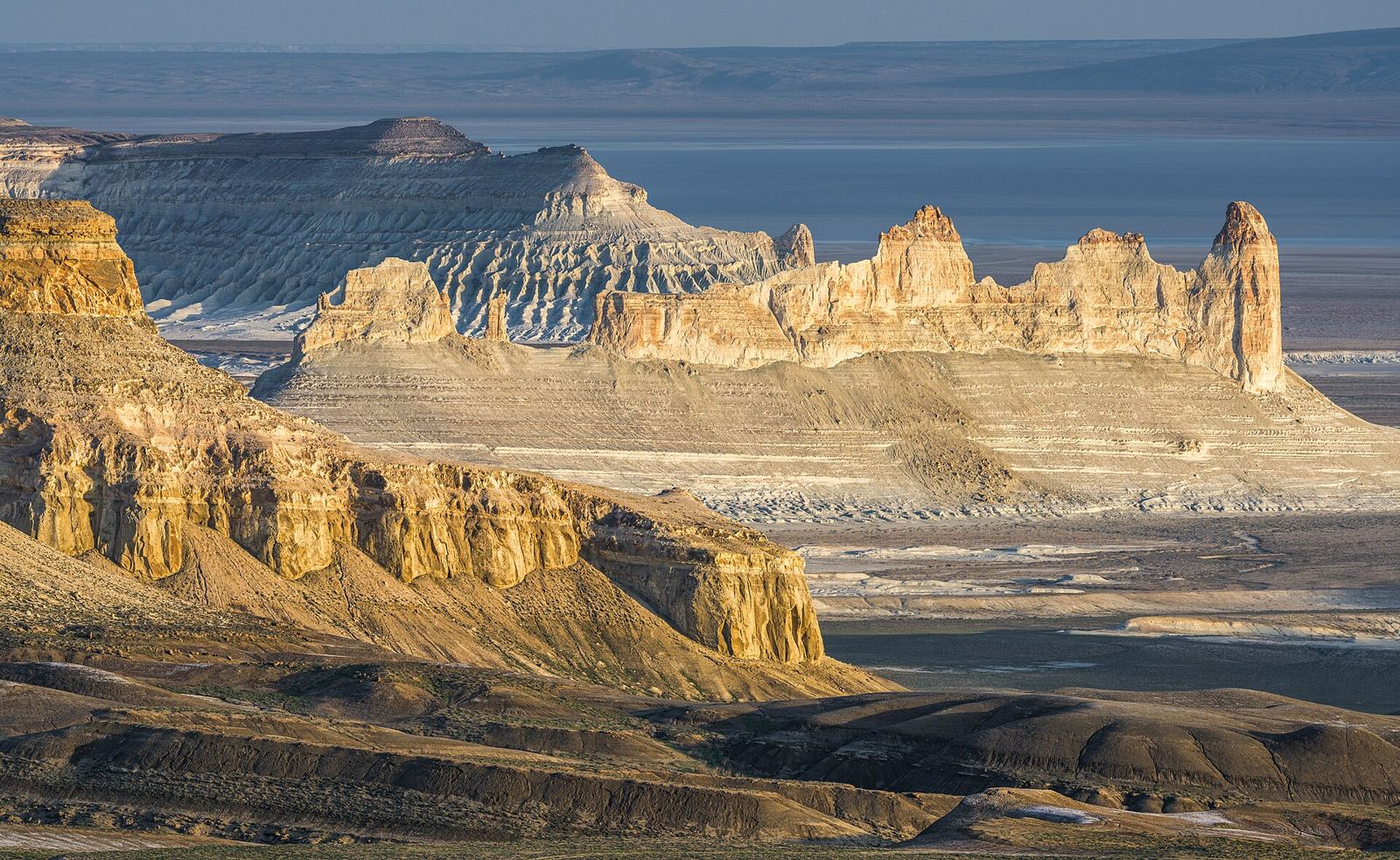
Karagiye Depression (50km)
One of world's deepest dry depressions at -132m below sea level. The vast salt flat creates mirages and color changes throughout the day. Spring sometimes brings temporary lakes attracting flamingos and other birds.
Caution: Extreme temperatures in summer
Getting There
By Air
Aktau International Airport (SCO) connects to:
- Domestic: Almaty (3 hours, 2-3 daily), Astana (2.5 hours, daily), Atyrau, Oral
- International: Moscow, Baku, Tbilisi, Istanbul (seasonal)
- Airport transfer: Bus #3 (150 KZT) or taxi (2,000-3,000 KZT)
By Train
- From Almaty: 2.5 days (rare service)
- From Astana: about 2 days via Aktobe and Beyneu
- From Russia: Via Atyrau or Beyneu
- Station: trains use Mangyshlak station on the edge of the city, not a central terminal — allow for a taxi
- Note: Trains infrequent and very slow—flying recommended. See getting around Kazakhstan for booking tickets.
Aktau to Baku by Ferry
There is no scheduled passenger ferry between Aktau and Baku. What exists are cargo and rail ferries operated mainly by Azerbaijan's state shipping company, sailing from Aktau port or the newer port at Kuryk, south of the city, to Baku's Alat port some way south of central Baku. They take a limited number of passengers in basic cabins alongside lorries and rail wagons.
- No timetable: ships leave when they are loaded and the weather allows. Waiting a day or more is normal, and passengers are usually told the departure time at short notice.
- Crossing time: the sailing itself is typically around a day, but queuing to dock at Alat can add many hours.
- Tickets: bought at the port, not online; fares are quoted in US dollars and change often. Bring food and water, as onboard catering is limited.
- Border rules: Azerbaijan kept its land borders closed to most travellers for several years after 2020 and passenger rules on the Caspian ferries have changed more than once since. Confirm the current position with the port and the Azerbaijani authorities, and get your Azerbaijani visa or e-visa sorted before you set off.
For most people the practical answer is to fly: Aktau–Baku is about an hour in the air. The ferry makes sense mainly for overlanders with a vehicle or bicycle. Similar irregular cargo ferries run to Turkmenbashi in Turkmenistan, which additionally needs a Turkmen visa arranged well in advance.
Getting Around
In the City
- Microdistrict system: No street names; locations identified by numbered districts
- City buses: Cover most areas (100 KZT)
- Taxi apps: Yandex Taxi works well
- Walking: City spread out; transport needed between districts
Desert Excursions
- Tour operators: Essential for desert sites (no public transport)
- 4WD rental: Possible but GPS and experience crucial
- Guided tours: 1-day from $80/person, 3-day from $300/person
- Best months: April-May, September-October (avoid summer heat)
Where to Stay
Beach Resorts
- Rixos Water World: All-inclusive resort with water park (from $150)
- Stigl Beach Hotel: Beachfront with pools (from $100)
City Center
- Holiday Inn: International standard, microdistrict 9 (from $90)
- Grand Hotel Victory: Soviet-style comfort (from $50)
- Hostel Aktau: Budget option, tour booking help (from $15)
Desert Camps
- Yurt camps: Available at some sites (basic facilities)
- Wild camping: Permitted in most desert areas (bring everything)
Where to Eat
Seafood & Caspian Specialties
- Gun Batyr: Fresh Caspian fish, local favorite
- Caspian Riviera: Upscale seafood with sea views
- Local markets: Caspian caviar, smoked fish (check export rules)
Traditional & International
- Samal Restaurant: Kazakh and Russian dishes
- Guns & Roses Bar: Western food, expat hangout
- Korean House: Authentic Korean (large Korean diaspora)
Tour Operators
Desert excursions require experienced guides. Recommended operators:
- Silk Road Adventures: English-speaking, professional equipment
- Mangystau Travel: Local expertise, competitive prices
- Stan Tours: Multi-day expeditions, photography focus
Typical packages:
- 1-day: Shakpak-Ata, Sherkala ($80-120/person)
- 2-day: Add Beket-Ata, Valley of Balls ($200-300/person)
- 3-day: Include Boszhira, Ustyurt Plateau ($400-600/person)
Practical Tips
- Climate: Desert extremes—hot summers (40°C+), mild winters, strong winds year-round
- Water: Heavily mineralized tap water; drink bottled only
- Sun protection: Essential—little shade in desert or city
- Cash: Many places don't accept cards; ATMs in city center only
- Language: Less English than major cities; Russian universal
- Desert safety: Never venture alone; GPS, water, sun protection essential
- Photography: Best light early morning/late afternoon; dust protection for cameras
- Connectivity: No mobile signal in most desert areas
- Season: Avoid July-August (extreme heat) and January (storms)
What to Bring
For desert excursions:
- Sunscreen SPF 50+, sunglasses, wide-brimmed hat
- Closed shoes for hiking, sandals for camp
- Warm layers (desert nights can be cold)
- Dust mask or scarf for wind
- Power bank (no electricity in desert)
- Basic first aid and any medications
- Cash for rural areas
Aktau: Questions Travellers Ask
Where is Aktau located?
Aktau is in far western Kazakhstan on the eastern shore of the Caspian Sea, at 43.65°N, 51.16°E. It is the capital of Mangystau Region, roughly 2,000km west of Almaty and about 370km across the Caspian from Baku. Almost everyone arrives by air.
Is Aktau really below sea level?
Yes. The city stands about 22 metres below global sea level because the Caspian itself lies below it. Inland, the Karagiye Depression reaches −132m, the lowest point in Kazakhstan, and makes an easy half-day trip from the city.
Can you take a ferry from Aktau to Baku?
Sometimes, but not on a schedule. Cargo and rail ferries sail from Aktau or Kuryk to Alat near Baku when loaded, carry a limited number of passengers, and can leave you waiting a day or more. Passenger rules have changed several times since 2020, so check locally before relying on it. Flying takes about an hour.
Can I buy caviar in Aktau and take it home?
Only farmed caviar in sealed, CITES-labelled containers, bought with a receipt. CITES allows most travellers up to 125g per person as personal effects, but some countries set stricter rules. Loose caviar sold at markets is almost certainly poached and can be confiscated.
Does Aktau have good beaches?
Aktau has swimmable Caspian beaches from roughly June to September, warmest from mid-July to late August. Much of the city shore is rocky, so the best sand is at managed resort strips (paid) or wild beaches a short taxi ride outside town. Shorelines shift as the Caspian falls, so ask locally.
What are the best day trips from Aktau?
The Karagiye Depression (50km), the Valley of Balls at Torysh (120km), the Shakpak-Ata underground mosque (135km) and Sherkala Mountain (170km) all work as day trips with a 4WD and driver. Boszhira and Beket-Ata are 280–300km away and are better as overnight trips.