Ancient Nomadic Heritage Alive in Modern Kazakhstan
Last reviewed on 29 September 2026
Kazakhstan's culture and traditions are rooted in centuries of nomadic life on the steppe. From celebrating the spring equinox at Nauryz to mastering the art of eagle hunting, Kazakh customs reflect a deep connection to nature, family, and community — and most of them are still practised, not merely remembered.
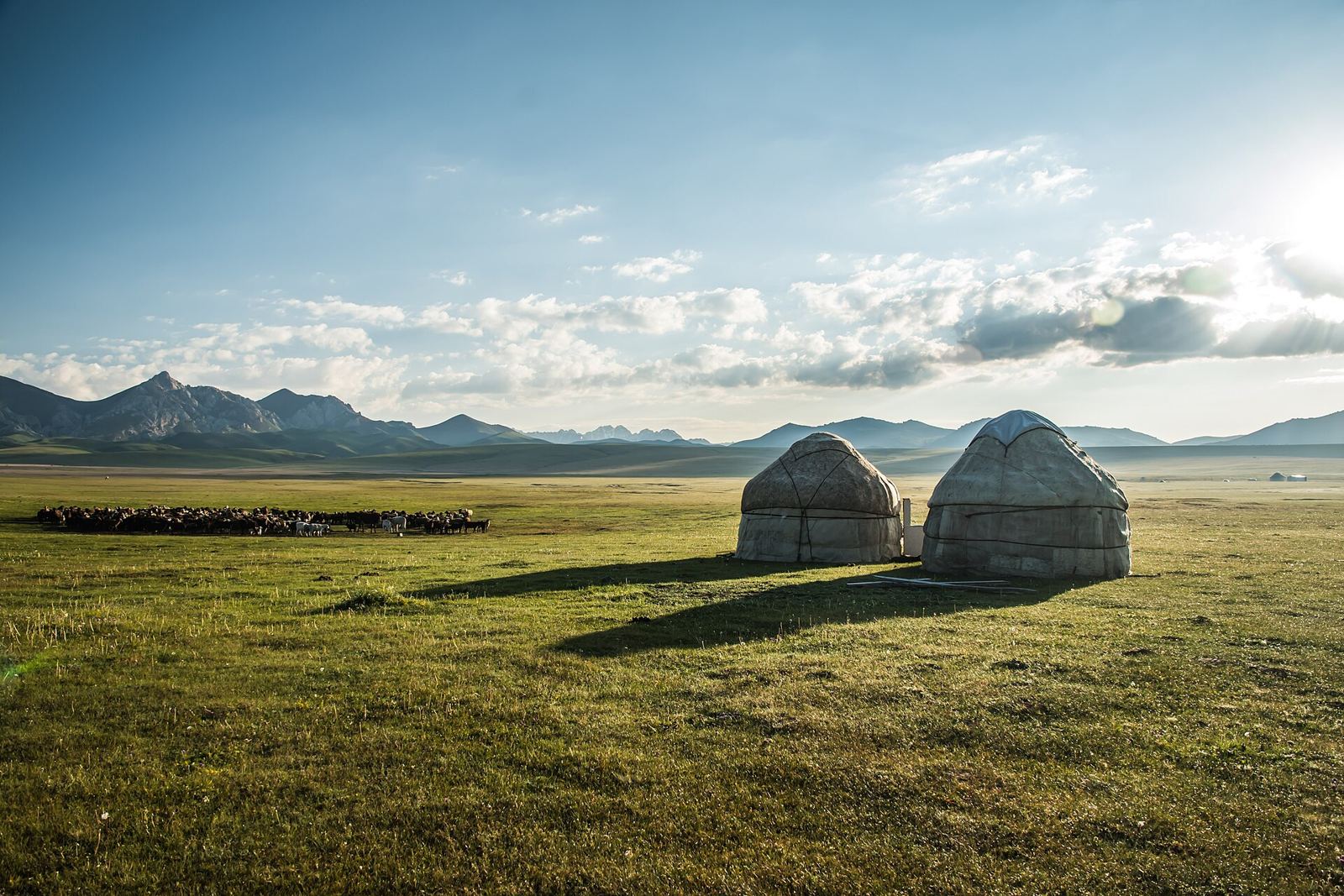
Yurts on a summer mountain pasture — still put up for festivals, weddings and seasonal herding. Photo: Myrzabek Ozubekov / CC BY-SA 4.0
What Are the Main Traditions in Kazakhstan?
The traditions you will actually meet in Kazakhstan today are about guests, elders and family occasions. In short:
Hospitality: guests are fed first and generously — the dastarkhan table and the qonaqasy meal owed to a visitor
Respect for elders: they are greeted first, seated in the place of honour and give the bata blessing
Nauryz: the spring new year on 21–23 March, the biggest celebration of the year
Toy: big family feasts for weddings, births, a child's first steps and milestone birthdays
Horse culture: kokpar, horse racing, eagle hunting and the dombra music that grew up around them
Many of these customs are shared across the country's ethnic groups, and Muslim and Orthodox festivals add another layer — see religion in Kazakhstan.
Major Festivals & Celebrations
The four below are the celebrations a visitor is most likely to run into. For the religious calendar in full — Oraza Ait, Orthodox Christmas and Easter — and for who observes what, see religion in Kazakhstan.
Nauryz (Наурыз)
March 21-23 • Spring Equinox
The most important holiday in Kazakhstan, Nauryz marks the Persian New Year and celebrates spring's renewal. This UNESCO-recognized festival features:
Nauryz kozhe: Special dish with seven ingredients symbolizing prosperity
Public celebrations: Concerts, yurt installations, traditional games
Family gatherings: Visiting relatives, gift-giving, forgiveness
Traditional sports: Wrestling (kazaksha kures), horse races
Visit Kazakhstan during Nauryz for the most authentic cultural experience!
Constitution Day
August 30
Celebrates Kazakhstan's constitution and independence. Features patriotic events, concerts, and fireworks in major cities. A day of national pride celebrating modern Kazakhstan.
Independence Day
December 16
Commemorates Kazakhstan's independence from the Soviet Union in 1991. Marked with official ceremonies, concerts and cultural events, especially in Almaty and Astana, and also a day of remembrance for the December 1986 protests. See the history of Kazakhstan for the background.
Kurban Ait (Eid al-Adha)
Date varies (Islamic calendar)
The most important Islamic festival in Kazakhstan. Families sacrifice livestock and share meat with relatives and the needy. A time for prayer, charity, and family gatherings.
Legendary Kazakh Hospitality
Kazakhs are renowned for their exceptional hospitality, a tradition deeply rooted in nomadic culture where helping travelers was essential for survival on the vast steppes.
The Guest is Sacred
In Kazakh culture, guests are treated with utmost respect and generosity:
Qonaqasy (қонақасы): The meal owed to a guest — traditionally an obligation, not a courtesy. A host who turned a traveller away could once be fined under customary law.
Dastarkhan (дастархан): The laid table itself, and by extension the whole ritual of eating together. It begins with tea and sweets, not with the main dish, and nobody leaves before the host closes it.
Bata (бата): A short spoken blessing given at the end of a meal, usually by the eldest person present, with palms held up and then drawn down over the face. Sit still for it.
Tea ceremony: Guests are immediately offered tea, regardless of the time
Best seat: Honored guests sit at the tor (place of honor) farthest from the door
Refusing is rude: Accept hospitality graciously, even if just a small portion
Mutual respect: Hosts and guests show deep respect for each other
Traditional Greetings: Handshakes and Cheek Kisses
A handshake is the standard greeting in Kazakhstan; cheek kissing is kept for people who already know each other. Men shake hands with every man in the room, often with both hands for an elder. Women greet friends and relatives with a kiss or a touch on each cheek. Between men and women, wait for the woman to offer her hand.
"Salem" or "Salam": Hello (universal greeting)
"Kalay zhagday?": How are you?
Handshakes: Common between men; may be light between men and women
Respect for elders: Always greet older people first
Cheek kissing: Common between women, and between close male relatives or old friends — usually one kiss on each cheek, or a light touch of cheeks. It is a greeting between people who already know each other; a handshake is the safer default for a visitor.
Two-handed handshake: Offering your right hand while touching your left to the other person's forearm, or using both hands, signals extra respect and is common when greeting an elder.
Traditional Arts & Crafts
Yurt (Киіз үй)
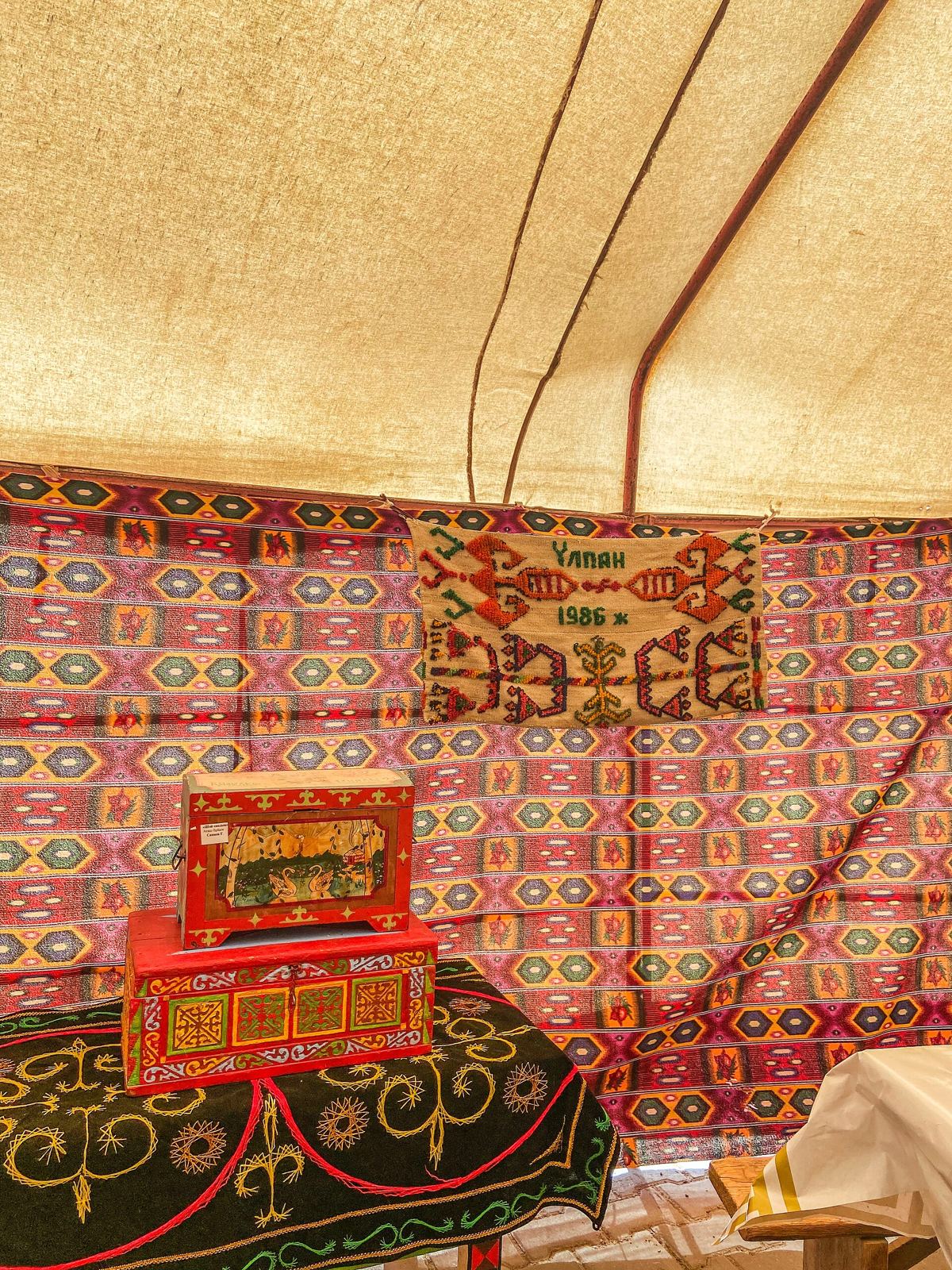
The iconic portable dwelling of nomadic life. Made of felt-covered wooden framework, yurts represent Kazakh engineering ingenuity. Still used for special events and in rural areas, yurts symbolize mobility, family, and connection to ancestral traditions. Inside, the place of honour (tor) faces the door, and the walls are hung with felt carpets and embroidered panels.
Where to see: Nauryz celebrations, ethnographic villages, rural areas
Felt-Making (Kiyiz)
Traditional craft using sheep wool to create felt for yurt coverings, carpets, and clothing. The process involves beating wet wool until fibers interlock. Intricate patterns and symbols carry cultural meaning.
Jewelry & Metalwork
Kazakh silver jewelry features intricate designs with semi-precious stones. Traditional pieces include headpieces, bracelets, and pendants with symbolic motifs representing protection, prosperity, and beauty.
Embroidery & Textiles
Colorful embroidery adorns traditional clothing, often featuring geometric patterns and animal motifs. Each region has distinctive styles and color combinations passed down through generations.
Inside a Kazakh yurt: felt carpets, embroidered hangings and painted chests stacked at the place of honour. Photo: Symbat Bolatova / CC BY-SA 4.0
Music & Performing Arts
Traditional Instruments
Dombra (Домбыра)
The national instrument—a two-stringed lute central to Kazakh music. Master dombra players are revered for preserving oral histories and epic poems through music.
Kobyz (Қобыз)
Ancient two-stringed bowed instrument with a haunting sound. Traditionally used by shamans and storytellers, believed to have spiritual power.
Sybyzgy (Сыбызғы)
End-blown flute made from reed or wood, producing melodic tunes that echo across the steppes. Associated with pastoral life and nature.
Traditional Performance
Aitys: Improvised poetry contests where performers exchange witty verses accompanied by dombra
Kui: Instrumental compositions telling stories without words
Epic poetry: Oral narratives preserving historical and mythological tales
Traditional dance: Graceful movements often mimicking animals or nature
Kazakhstan's Dance Traditions
Kazakh dance grew out of a culture that spent its life on horseback, and it shows: the upper body does most of the work. Shoulders shrug and ripple, arms sweep wide, and the hands imitate things a herder saw every day — a hawk stooping, a camel's gait, a woman spinning wool. Steps stay small and close to the ground. Because dance was one of the few arts a nomadic household could carry with it, it survived the move to towns almost intact, and the pieces below are the ones you are most likely to see performed.
Kara Zhorga (Қара жорға): The best-known Kazakh folk dance, named after a black ambling horse. Dancers mimic a rider's bounce with a rolling shoulder movement, and it is danced at weddings and Nauryz by everyone from children to grandparents.
Ormek Bi (Өрмек би): The “weaving dance”, in which the movements act out setting up a loom and working the thread — a women's dance built from ordinary daily labour.
Koshbasy (Көшбасшы): A processional dance tied to the seasonal migration between summer and winter pastures, led by a single dancer at the head of the line.
Hunting and animal dances: A broad family of solo pieces set to a fast dombra kui, in which the dancer takes the part of an eagle, a horse or the quarry itself. These are what folk ensembles most often stage.
Where to see a traditional Kazakh show: Dance is rarely a stand-alone event. You will usually meet it inside something else — a wedding toy, a Nauryz square, a yurt-camp evening, or the state folk ensembles that perform year-round in Almaty and Astana. If you want to see it without an occasion, look for a programme at Almaty's Kazakh State Philharmonic or the Astana Opera.
Nomadic Sports & Games
Kokpar (Көкпар)
Goat Dragging
Dramatic horseback competition where riders fight for possession of a goat carcass and attempt to place it in the opponent's goal. This intense, ancient sport showcases horsemanship skills essential to nomadic life. Played during major celebrations.
Kazaksha Kures
Kazakh Wrestling
Traditional wrestling where competitors try to throw their opponent to the ground. Requires strength, technique, and strategy. Champions are highly respected in Kazakh society.
Kyz Kuu (Қыз қуу)
Catch the Girl
Playful horseback chase where a young man tries to catch a young woman. If he succeeds, he gets a kiss; if she catches him, she playfully whips him. Symbolizes courtship rituals and equestrian skill.
Baige (Байге)
Horse Racing
Long-distance horse races, sometimes covering 25-100km. Horses are central to Kazakh culture, and racing showcases the bond between rider and horse. Young riders (often children) demonstrate incredible skill.
Eagle Hunting (Burkitshi)
Ancient Tradition
Training golden eagles to hunt foxes and rabbits—a skill passed down for millennia. Burkitshi (eagle hunters) develop deep bonds with their birds. This UNESCO-recognized tradition is still practiced in the Altai region.
Where to see: Eagle hunting festivals near Almaty (fall/winter)
Tenge Ilu
Picking Up Coins
Riders gallop at full speed while trying to pick up coins from the ground—a test of balance, flexibility, and horsemanship that amazes spectators.
Life Ceremonies & Rituals
Birth Traditions
Shildekhana: Celebration held soon after a baby is born, when relatives come to congratulate the family
Kyrkynan shygaru: The 40th-day ritual, when the baby is bathed in water with 40 spoonfuls poured in and has its first haircut and nail trim
Besik toy: Ceremony placing baby in traditional cradle (besik)
Tusau kesu: Cutting ceremonial rope tied to child's legs when they take first steps, symbolizing freedom to walk through life
Weddings (Toy)
Kazakh weddings are elaborate multi-day celebrations combining ancient customs with modern elements:
Kyz uzatu: Farewell ceremony for the bride at her family's home
Betashar: Veiling ceremony where bride is introduced to groom's family
Kelin tusiru: Welcome ceremony for the new daughter-in-law
Large celebrations: Hundreds of guests, abundant food, music, and gifts
Birthdays and Anniversaries
Milestone birthdays are family events rather than private ones. Round-number birthdays — above all the 60th — and the 63rd, the age at which the Prophet Muhammad is said to have died, are traditionally marked with a large toy: a hired hall or a big home meal, speeches (tost) by each guest in turn, a blessing from the eldest, and gifts of money or clothing. The Kazakh calendar also counts life in twelve-year cycles (mushel), and the years that close a cycle — 13, 25, 37, 49 and so on — are traditionally treated with care, often marked by giving away a personal item. If you are invited to any toy as a guest, go: bring a gift or an envelope, expect to be asked to say a few words, and do not plan to leave early.
Respect for Elders
Elderly people hold special status in Kazakh society:
Always stand when an elder enters the room
Serve elders first at meals
Seek advice and blessings from elders
Children are taught to respect age and wisdom
Cultural Do's and Don'ts
Do
Accept offered tea and food
Dress modestly, especially in rural areas
Remove shoes when entering homes
Show respect for elders
Try to learn basic Kazakh/Russian phrases
Ask permission before photographing people
Give small gifts when visiting homes
Don't
Refuse hospitality outright—at least taste a little
Point your feet at people when sitting
Touch bread with your feet (considered disrespectful)
Speak loudly in public spaces
Make overly negative comments about the country
Be overly affectionate in public
Ethnic Kazakh Culture Today
It is fair to ask how much of this is still real. Kazakhstan is now a mostly urban country — around three in five people live in cities — and the last genuinely nomadic households were settled by force in the 1930s. What survived was not the nomadism but the social code that came with it.
In practice, that means the traditions on this page are unevenly alive. Some are universal: the dastarkhan, the seating order that puts the eldest guest furthest from the door, the blessing at the end of a meal, the deference shown to elders in speech and in who is served first. A city family in an Almaty apartment observes these as readily as a herding family in Zhetysu. Nauryz is a public holiday everyone marks, and beshbarmak still arrives on a shared platter at any occasion that matters.
Others have become specialist pursuits. Eagle hunting is practised by a few hundred burkitshi, concentrated in the east and in the Kazakh communities of western Mongolia. Kokpar survives as an organised sport with leagues and rules rather than as a village free-for-all. Yurts are put up for weddings, festivals and tourism, and dismantled again afterwards. Felt-making and jewellery work are kept going largely by craft cooperatives and a state-backed revival.
Kazakhstan is also genuinely multi-ethnic: ethnic Kazakhs are about 70% of the population, alongside large Russian, Uzbek, Ukrainian, Uyghur, Tatar and German communities, and the culture you meet in Shymkent is noticeably more traditional than the culture you meet in Astana. Language use splits the same way — Kazakh dominates in the south and west, Russian in the north and in business. Read this page as the Kazakh thread inside that mix, not as a description of everyone in the country. For how faith fits into the same picture, see religion in Kazakhstan; for the language question, see Kazakh and Russian for travellers.
Where to Experience Traditions
Ethnographic Villages: Near Almaty and Astana, experience yurt stays and traditional activities
Nauryz Celebrations: March 21-23 in all cities—the best time for cultural immersion
Museums: Central State Museum (Almaty), National Museum (Astana)
Cultural Centers: Regular performances of traditional music and dance
Rural Areas: Visit villages to see authentic nomadic lifestyle
Eagle Hunting Festivals: Seasonal events near Almaty (October-March)
Kazakh Traditions: Frequently Asked Questions
What are the main traditions in Kazakhstan?
The most visible are hospitality to guests (the dastarkhan table and the qonaqasy meal), respect for elders, the bata blessing after meals, the Nauryz spring festival on 21–23 March, large family celebrations (toy) such as weddings, and horse culture, including kokpar and eagle hunting.
What is a dastarkhan?
The dastarkhan is the laid table for guests and, by extension, the whole ritual of eating together. It starts with tea, bread, sweets and snacks before the main dish, and the host decides when it ends.
What is bata in Kazakh culture?
Bata is a short spoken blessing, usually given by the eldest person present at the end of a meal or before a journey. Everyone holds their palms up during it and then draws them down over the face.
Do Kazakhs kiss on the cheek when greeting?
Sometimes. Cheek kissing or touching cheeks is common between women and between close relatives or old friends. Visitors meeting people for the first time should use a handshake, and let women offer their hand first.
How do Kazakhs celebrate birthdays and anniversaries?
Round-number birthdays, especially the 60th, and the 63rd birthday are traditionally marked with a large toy (feast) for relatives and friends, with speeches, blessings and gifts. Weddings and a child's first steps (tusau kesu) are the other big family occasions.
Experience Living Traditions
From ancient nomadic customs to vibrant modern celebrations, Kazakhstan's traditions offer unforgettable cultural experiences.