The national dish, horse-meat specialities, bread, tea and what to order
Last reviewed on 29 September 2026
Kazakh food is nomad food: meat, dairy and bread, built around what a herding household could keep, carry and share. Horse and lamb do most of the work, fermented milk does the rest, and the harsh steppe climate explains almost every technique on the table — boiling, drying, salting and fermenting all exist because refrigeration did not.
Today, Kazakhstan's culinary scene blends those nomadic traditions with Russian, Uzbek, Uyghur, Korean and international influences, so a normal week of eating in Almaty might run from beshbarmak to plov to Korean carrot salad without anyone finding it strange.
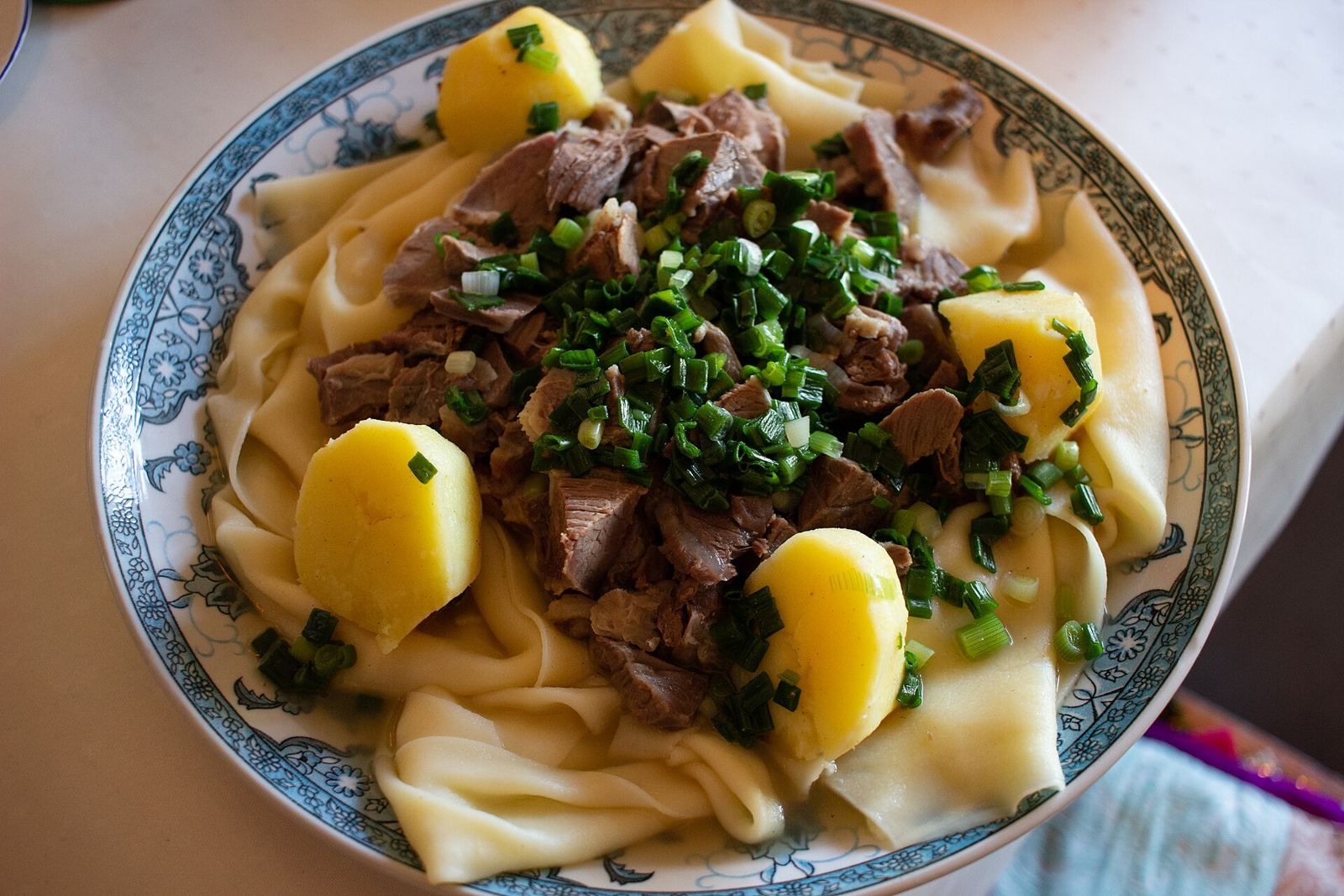
A home-style platter of beshbarmak with potatoes, served for the whole table to share. Photo: NataAllice / CC BY-SA 4.0
What Is Kazakh Food Like?
Kazakh food is hearty, mild and meat-centred. The core of the cuisine is boiled or cured meat (horse and lamb above all, plus beef), fresh wheat noodles and fried breads, and dairy in every form from sour cream to fermented mare's milk. Spices are used sparingly — salt, onion and black pepper do most of the work. Tea is drunk at every meal. On top of that sits a layer of dishes shared with Kazakhstan's neighbours and minorities, so plov, lagman, manti and samsa are everyday food here too.
What Is Kazakhstan's National Dish?
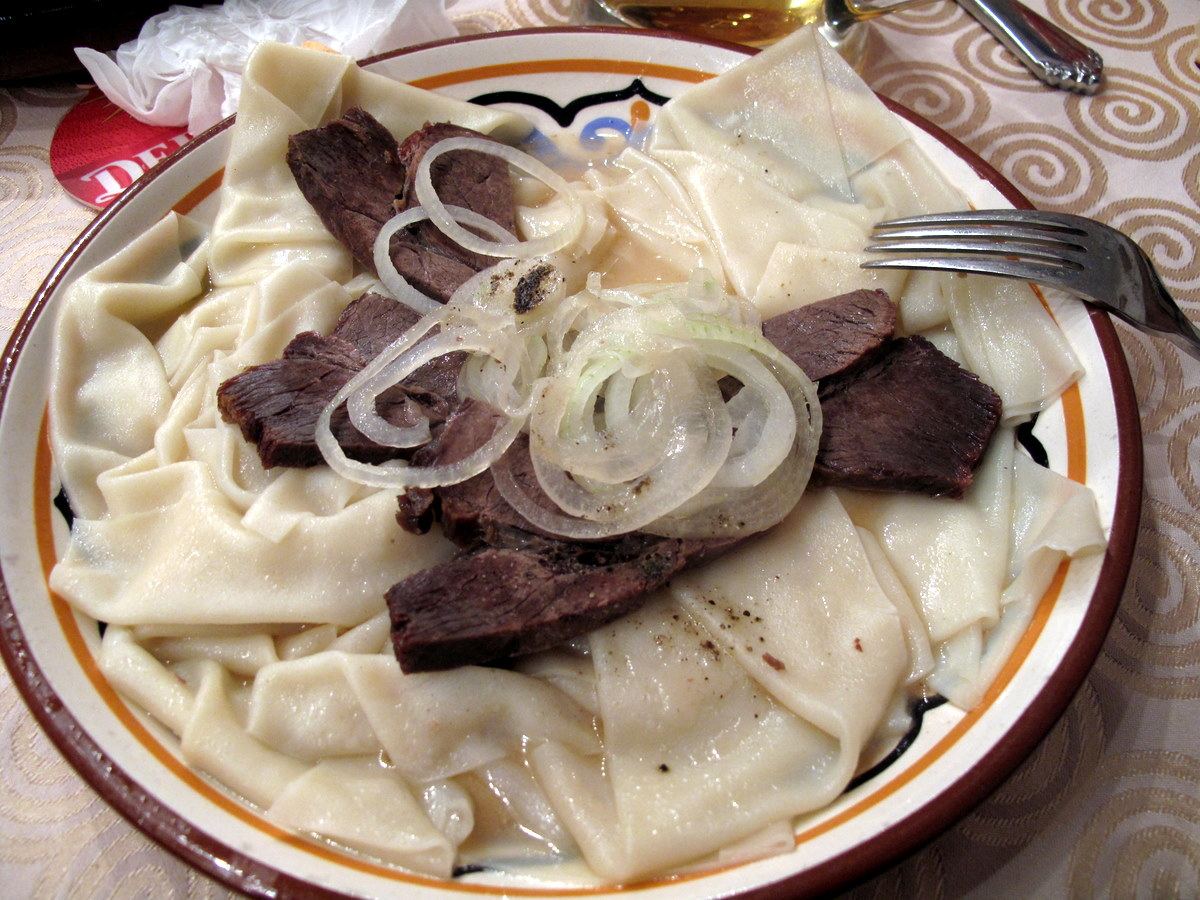
Beshbarmak is Kazakhstan's national dish, and it is the one meal you should make sure you eat. The name means "five fingers", because it is eaten by hand. Boiled horse meat or lamb is sliced and laid over wide sheets of flat noodle, then covered with tuzdyk — onions softened in the fatty broth — and served with a bowl of that broth, called sorpa, to drink alongside. It is a communal dish: one platter in the middle, everyone eating from it, and the guest of honour served first from the head of the animal.
If you have eaten a Kazakh dish of horse meat on flat pasta with onions — often with potatoes and carrots in home versions — and are trying to put a name to it, it was beshbarmak. In Kyrgyzstan and among Bashkirs and Tatars you will find close cousins under similar names.
Beshbarmak with horse meat, noodles and a topping of onions stewed in broth. Photo: Peretz Partensky from San Francisco, USA / CC BY-SA 2.0
Beshbarmak is not everyday food. It marks weddings, funerals, Nauryz and the arrival of a guest worth the trouble, and preparing it takes most of an afternoon. If you are invited to one in a family home, accept.
How beshbarmak is made
The method is simple; the time is the hard part. A large piece of horse meat or lamb on the bone (often with kazy sausage added) is simmered for several hours, skimming the broth. Meanwhile a plain dough of flour, egg, water and salt is rolled very thin and cut into squares or diamonds roughly the size of a palm. The noodles are boiled in the finished broth, laid on a platter, topped with the sliced meat and covered with onion rings stewed in a ladle of fatty broth. The broth itself is served separately in bowls, sometimes with kurt dissolved in it.
Horse Meat: The Dish Most Visitors Ask About
Horse is the prestige meat of the Kazakh table, not a curiosity, and it appears in several forms that are worth telling apart:
Kazy — rib meat and fat packed into casing, boiled or smoked, sliced thin and served cold. The most prized cut.
Zhaya — salted and smoked meat from the hindquarter, richer and fattier.
Shuzhyk — a cured horse sausage, closer to what most visitors expect a sausage to be.
Zhal — smoked fat from under the mane, served in translucent slices; an acquired taste and a compliment when offered.
Horses raised for meat in Kazakhstan are a distinct type from riding horses, and the meat is leaner and slightly sweeter than beef. Turning it down is not rude if you explain, but trying it is the fastest way to a warm reception.
Bread and Breakfast
Bread is treated as sacred in Kazakhstan. Round shelpek flatbreads are fried in memory of ancestors; baursak, pillows of fried dough, are piled up for guests and at every celebration; and Central Asian tandoor bread — tandyr nan — is bought fresh from a street oven. You do not put bread face-down on the table, and you do not throw it away.
A Kazakh breakfast is closer to a spread than a plate: bread and butter, sour cream, jam, kurt or fresh cheese, cold sliced meat if there is any, boiled eggs, and tea with milk poured continuously by the host. In cities you will also find syrniki (curd pancakes) and porridge, a Russian inheritance. Hotel buffets serve international breakfasts; the real thing happens in guesthouses and homestays.
Sweets and Chak-Chak
Chak-chak (shak-shak) is the sweet you will meet first: short lengths of fried dough bound into a sticky mound with hot honey, cut into wedges and eaten with tea. It is shared across the Turkic world and appears at every Kazakh celebration. Alongside it expect kurt (hard, salty dried cheese balls — savoury, not sweet, and a genuine surprise), dried apricots and raisins, and boiled sweets set out in bowls the moment you sit down.
12 Dishes to Try in Kazakhstan
Beshbarmak
The National Dish
Literally meaning "five fingers" (traditionally eaten by hand), beshbarmak consists of boiled meat (usually horse or lamb) served over flat noodles with onion sauce. This ceremonial dish is served at special occasions and celebrations, representing Kazakh hospitality at its finest.
What to expect: Rich, savory flavors with tender meat and homemade pasta-like noodles in aromatic broth.
Kazy (Казы)
Horse Meat Sausage
A prized delicacy made from horse meat and fat stuffed into intestine casing and boiled or smoked. Kazy is considered a luxury food, often served at weddings and important gatherings. The meat is tender with a unique, slightly sweet flavor.
Serving: Typically sliced thin and served cold as an appetizer or part of a meat platter.
Baursak (Баурсак)
Fried Dough
Golden, puffy pieces of fried dough, similar to doughnuts but unsweetened. Baursak is ubiquitous at Kazakh tables, served with tea, as a side dish, or even as dessert with honey or jam. These addictive little breads are crispy outside and soft inside.
When to eat: Anytime! Perfect with morning tea or as accompaniment to main dishes.
Plov (Плов)
Rice Pilaf
While originating from Central Asian neighbors, plov is beloved in Kazakhstan. This hearty rice dish cooked with meat (lamb or beef), carrots, onions, and spices is a staple at celebrations and restaurants. Each region has its own variation.
Best experience: Try it at an Uzbek restaurant in Almaty for the most authentic version.
Shubat (Шұбат)
Fermented Camel Milk
A traditional drink cherished for its health benefits and unique salty-sour taste. Shubat is rich in vitamins and believed to aid digestion. It's thicker than kefir with a distinctive flavor that may surprise first-timers.
For adventurous eaters: An acquired taste, but culturally significant and nutritious.
Kumys (Құмыс)
Fermented Mare's Milk
Another traditional fermented dairy drink, kumys has been consumed by nomads for millennia. Slightly alcoholic (1-3%), it's valued for its probiotic properties and refreshing taste. Best enjoyed fresh in summer.
Cultural note: Offering kumys to guests is a sign of respect and hospitality.
Samsa (Самса)
Savory Pastries
Flaky triangular or round pastries filled with minced meat (lamb or beef), onions, and spices, baked in a tandoor oven. The crispy, golden exterior gives way to juicy, flavorful filling. Perfect street food or appetizer.
Where to find: Bakeries, street vendors, and cafes throughout Kazakhstan.
Lagman (Лағман)
Hand-Pulled Noodles
A hearty noodle soup with Uyghur origins, featuring hand-pulled noodles in rich broth with meat and vegetables. The noodles are impressively stretched by hand, creating long, chewy strands. Available as soup or stir-fried.
Recommendation: Visit Uyghur restaurants in Almaty for the best lagman experience.
Kurt (Құрт)
Dried Cheese Balls
Hard, salty balls of dried cheese, a traditional snack for travelers and nomads. Kurt is portable, long-lasting, and packed with protein. The intense salty flavor and rock-hard texture take getting used to, but it's an authentic nomadic food.
Travel tip: Great for long journeys, but start with small bites!
Kuyrdak (Қуырдақ)
Fried Meat and Offal
A rich fry-up of meat, liver, heart and kidney with onion and sometimes potato, traditionally cooked the day an animal is slaughtered. It is homely, filling and widely served in canteens and Kazakh restaurants.
Good to know: Ask what is in it if you avoid offal — recipes vary a lot.
Shashlyk (Шашлык)
Grilled Skewers
Chunks of marinated lamb, beef or chicken grilled over charcoal, served with raw onion and bread. The default meal at roadside cafés, mountain picnics and summer terraces, and the easiest dish to order anywhere.
Ordering tip: Priced per skewer; two or three make a meal.
Manti (Манты)
Steamed Dumplings
Large steamed dumplings filled with minced meat (often lamb) and onions, sometimes with pumpkin. Served with sour cream or butter, manti are juicy and flavorful. A favorite comfort food across Kazakhstan.
Eating style: Bite carefully—hot juice inside!
Kazakh Tea Culture
Tea (shay) is integral to Kazakh culture and hospitality. Black tea is the standard, often served strong with milk and sugar. The tea ceremony is an important social ritual:
Hospitality: Guests are always offered tea first, regardless of the time of day
Never fill the cup: Traditionally, tea is served in small amounts so it stays hot and you can offer frequent refills—a sign of wanting your guest to stay longer
Accompaniments: Tea is served with baursak, sweets, dried fruits, and nuts
Green tea: Also popular, especially in southern regions
Dining Customs & Etiquette
Traditional Dining
Meals are communal and social events
The eldest or most honored guest is served first
Refusing food can be seen as impolite—try at least a small portion
Leaving a little food on your plate shows you're satisfied
Hosts will insist you eat more—it's normal!
Modern Restaurants
Major cities have diverse international cuisine
Many restaurants add a 10–15% service charge; check the bill before tipping extra
Service can be slower—enjoy the relaxed pace
English menus available in tourist areas
Credit cards widely accepted in cities
Where to Eat Kazakh Food
Look for places advertising national cuisine (ұлттық тағамдар in Kazakh, национальная кухня in Russian). Restaurants change quickly, so check recent reviews on 2GIS or Google Maps before you go rather than relying on any printed list.
Water: Drink bottled water in most areas; tap water quality varies
Street food: Choose busy vendors with high turnover
Dairy: Fermented products like kumys and shubat are safe when fresh
Markets: Fresh produce is generally safe; wash thoroughly
Restaurants: Stick to busy, well-reviewed establishments
Kazakh Food: Frequently Asked Questions
What is the national dish of Kazakhstan?
Beshbarmak: boiled horse meat or lamb served on wide sheets of flat noodle with onions softened in the meat broth. The name means "five fingers" because it was traditionally eaten by hand.
What is the Kazakh dish with horse meat and noodles?
That is beshbarmak. Home versions often add boiled potatoes and sometimes carrots, and the broth (sorpa) is served in a bowl on the side.
What do people in Kazakhstan eat every day?
Everyday meals are simpler than feast food: soups, plov, lagman noodles, manti dumplings, samsa pastries, salads, bread and plenty of tea. Beshbarmak and horse-meat delicacies are kept for guests and celebrations.
Is horse meat eaten in Kazakhstan?
Yes. Horse is the prestige meat of the Kazakh table, eaten as kazy and shuzhyk sausages, smoked zhaya and in beshbarmak. Visitors are never obliged to try it, but it is widely available in restaurants and markets.
Is Kazakh food spicy?
No. Traditional Kazakh food is mild and seasoned mainly with salt, onion and black pepper. Uyghur and Korean dishes found in Kazakhstan, such as lagman and carrot salad, can be spicier.
Ready to Taste Kazakhstan?
From ancient nomadic recipes to modern fusion cuisine, Kazakh food offers unforgettable flavors and cultural experiences.