Traditions & Customs
Nomadic hospitality, Nauryz celebrations, eagle hunting, traditional music on the dombra and kobyz, and the codes of respect that still shape daily life.
Read about Traditions →A traveller's introduction to the people, traditions, cuisine, faith, history and language of Kazakhstan
Last reviewed on 29 September 2026
Kazakh culture is the result of centuries of nomadic life on the Eurasian steppe, layered with Silk Road trade, Islamic scholarship, Russian and Soviet influence, and, since 1991, renewed national revival. For visitors, understanding the basics of this heritage makes destinations across Kazakhstan far more meaningful — a yurt is not just a tent, a bowl of kumys is not just fermented milk, and a game of kokpar is not just a sport.
Kazakhstan's culture is a nomadic Turkic culture with strong Islamic, Russian and Soviet layers, lived in a multi-ethnic, mostly urban country. Its defining traits are generous hospitality to guests, deep respect for elders and family lineage, a love of horses and open land, a mild and relaxed attitude to religion, and a habit of switching between Kazakh and Russian in the same conversation. Traditions such as the dastarkhan table and the Nauryz spring festival are observed in city apartments as much as in villages.
This section of the guide breaks Kazakh culture into broad themes. Each has its own page with deeper detail, but the overview below explains how they connect.
Nomadic hospitality, Nauryz celebrations, eagle hunting, traditional music on the dombra and kobyz, and the codes of respect that still shape daily life.
Read about Traditions →Beshbarmak, kazy, baursak, plov, kumys and shubat — dishes built around the horse, sheep, and dairy that sustained steppe life for centuries.
Explore the Food →From Saka warriors and the Silk Road, through the Kazakh Khanate, Russian annexation, and the Soviet era, to independence in 1991 and the country today.
Follow the Timeline →A mostly Muslim country with a large Orthodox minority and a secular state. Which religious celebrations fall when, and how to behave at mosques, churches and shrines.
Religion in Kazakhstan →Kazakh belongs to the Turkic family; Russian is widely used in cities. Learn a handful of polite phrases and the basics of the script you'll see around you.
Language Basics →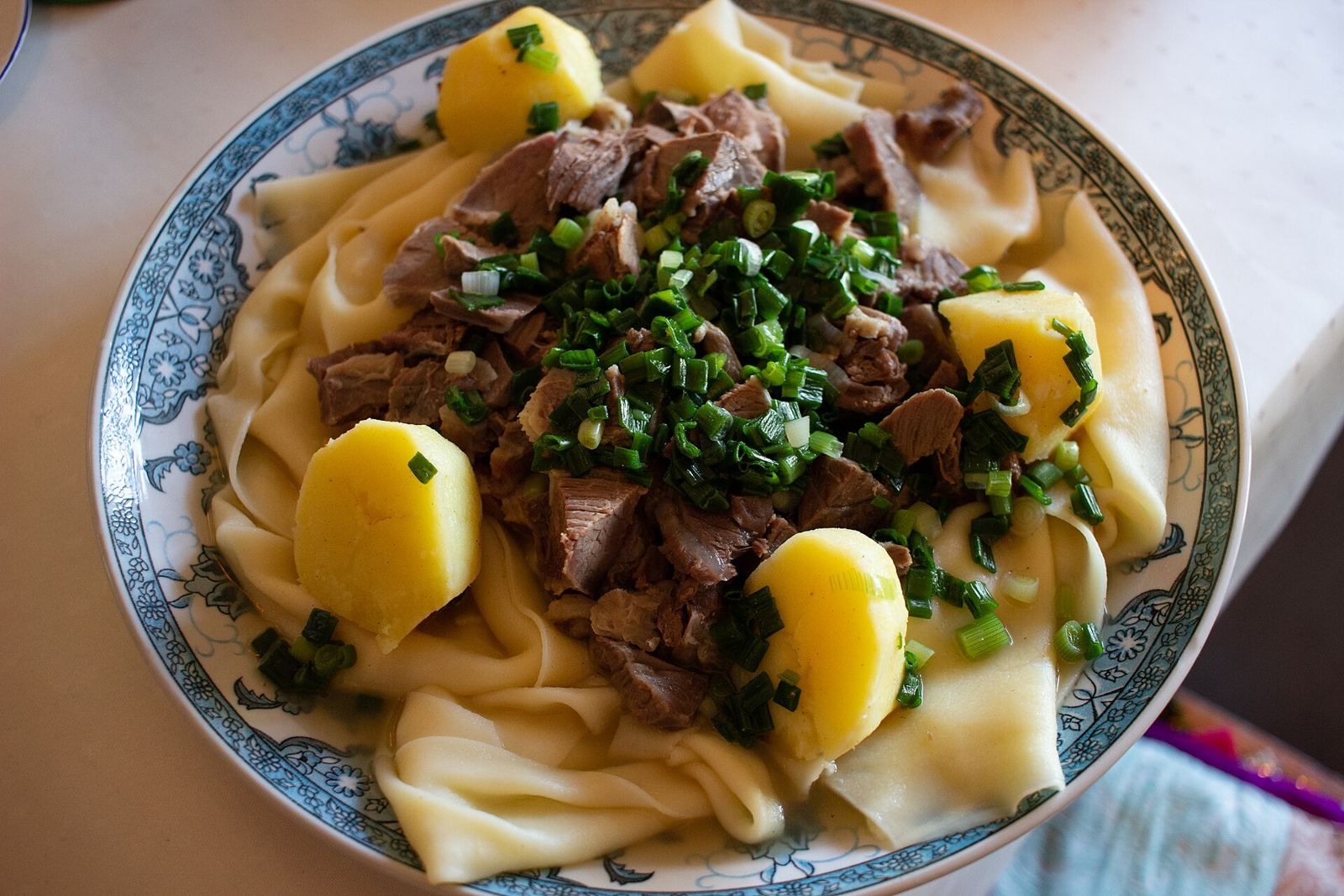
Kazakhstan is home to about 20 million people and well over a hundred ethnic groups. In the 2021 census, ethnic Kazakhs made up about 70% of the population and Russians about 15%, followed by Uzbeks, Ukrainians, Uyghurs, Germans, Tatars and Koreans. Many of these communities arrived under the Russian Empire or were deported here in the Soviet period, and they have left their mark on the food (Korean carrot salad, Uyghur lagman, Uzbek plov), the churches and the street names. Kazakh is the state language; Russian is used officially too and remains the everyday language of many city dwellers — see language basics.
The share of ethnic Kazakhs has risen steadily since independence, and with it the use of the Kazakh language, especially among the young. The south and west feel more traditional and Kazakh-speaking; the north and the big cities more Russian-speaking and secular.
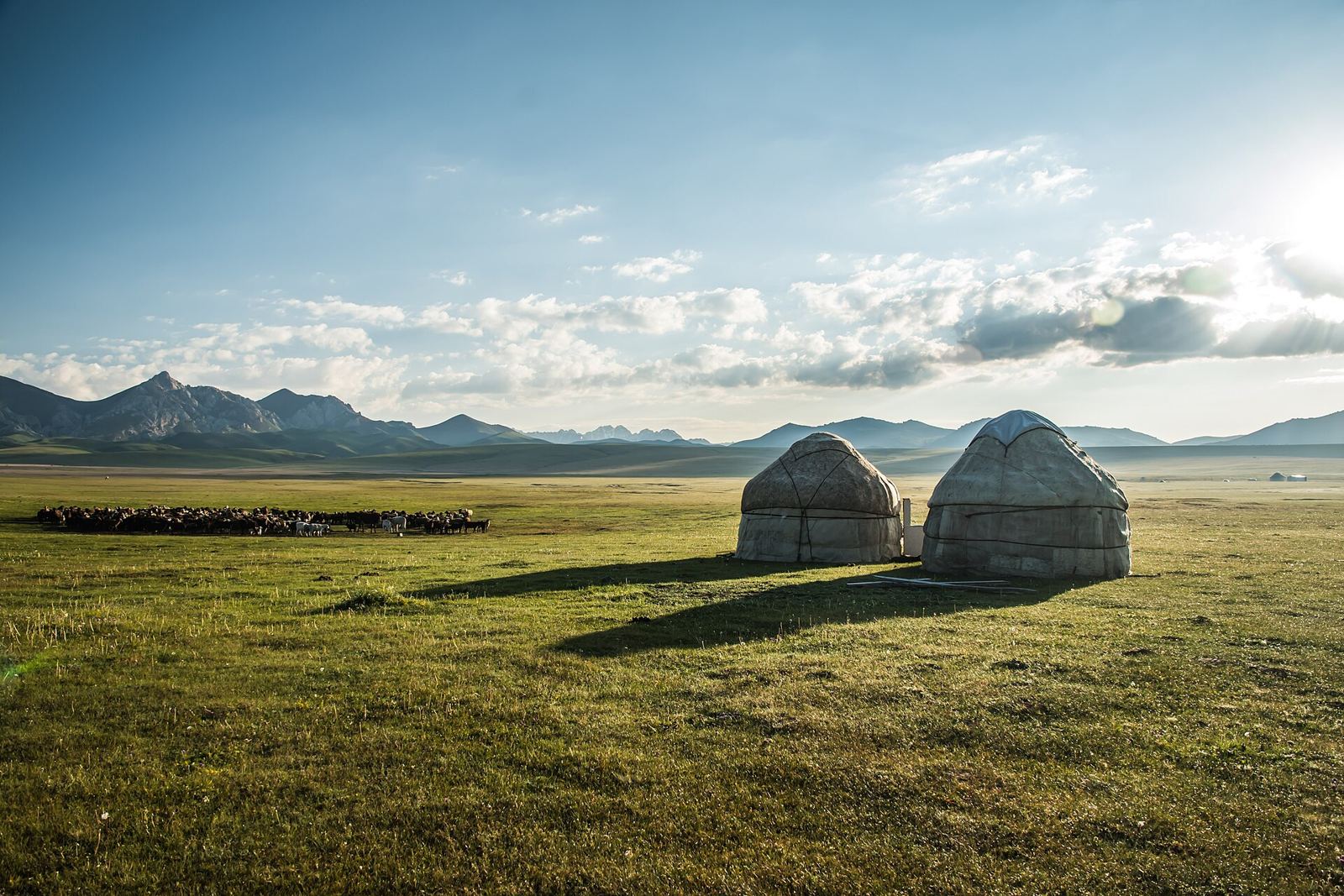
Before the modern borders were drawn, Kazakhs lived as pastoral nomads, moving their herds between seasonal pastures across the steppe, semi-desert, and mountain foothills. This was not a primitive way of life; it was a highly adapted economy based on horses, sheep, goats, camels, and cattle. The yurt — a felt-covered wooden frame that can be assembled or struck in a few hours — was the centerpiece. Its round form, its division into guest and family sections, and the decoration of its interior all carry meanings that still echo in contemporary homes and public spaces.
Three elements run through almost every aspect of Kazakh culture: the horse, the family lineage (or ru), and hospitality. Horses gave the nomads mobility and meat, milk, and leather. Knowing your lineage back several generations was — and for many people still is — a basic point of identity. Hospitality toward travelers is not just good manners; it was a survival strategy on an open steppe where your life could depend on a stranger's open door. Each of these ideas appears again and again in the food, the rituals, the songs, and the proverbs.
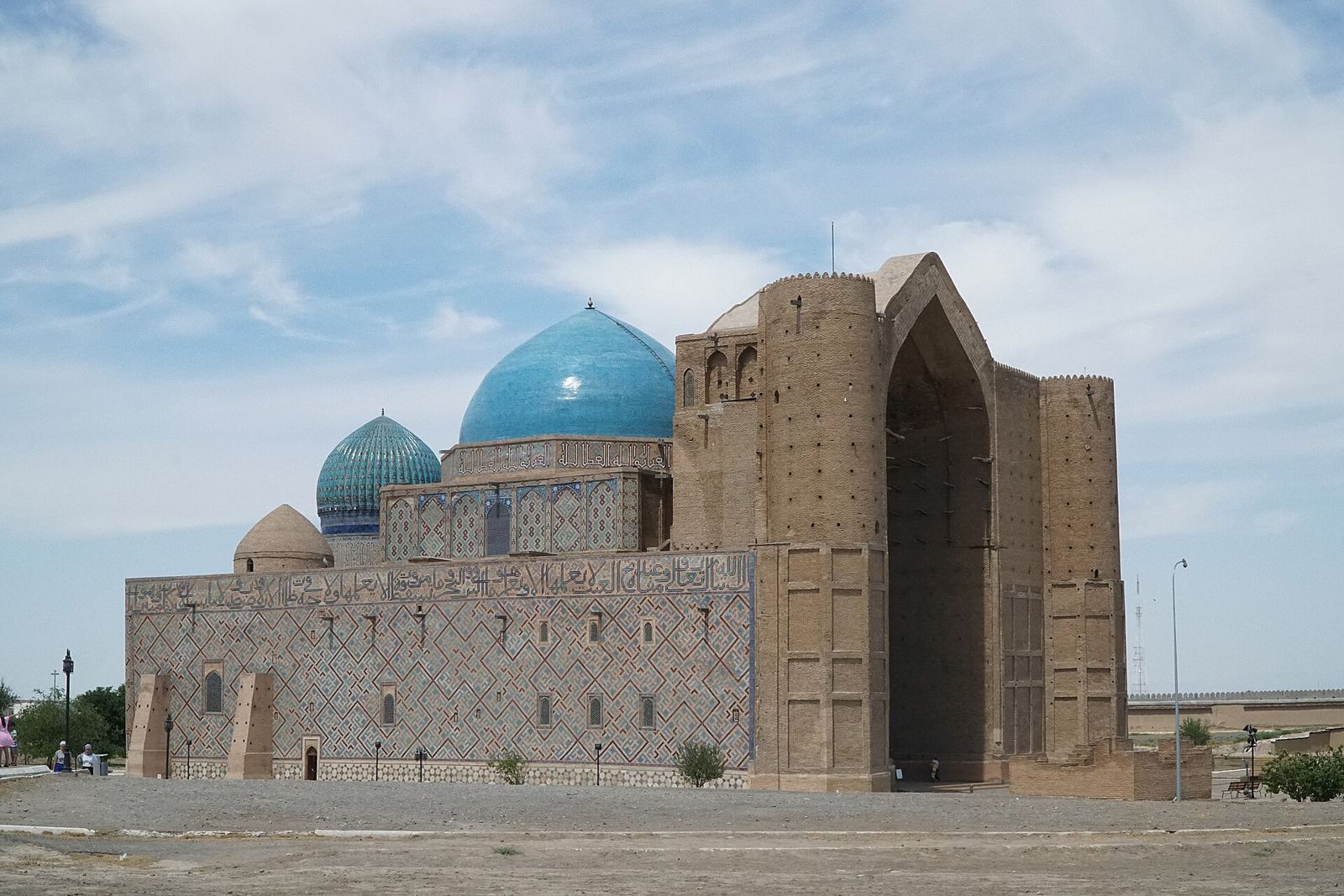
The south of the country — today's Turkestan, Taraz, and Shymkent regions — sat squarely on the Silk Road. Caravans carried silk, paper, spices, and ideas between China and the Mediterranean, and cities grew around the caravanserais and mosques that supported them. Islam arrived through trade and through missionaries, and by the late medieval period Sufi orders were influential across Central Asia. The Mausoleum of Khoja Ahmed Yasawi in Turkestan, a UNESCO World Heritage Site, is the most visible surviving symbol of that era.
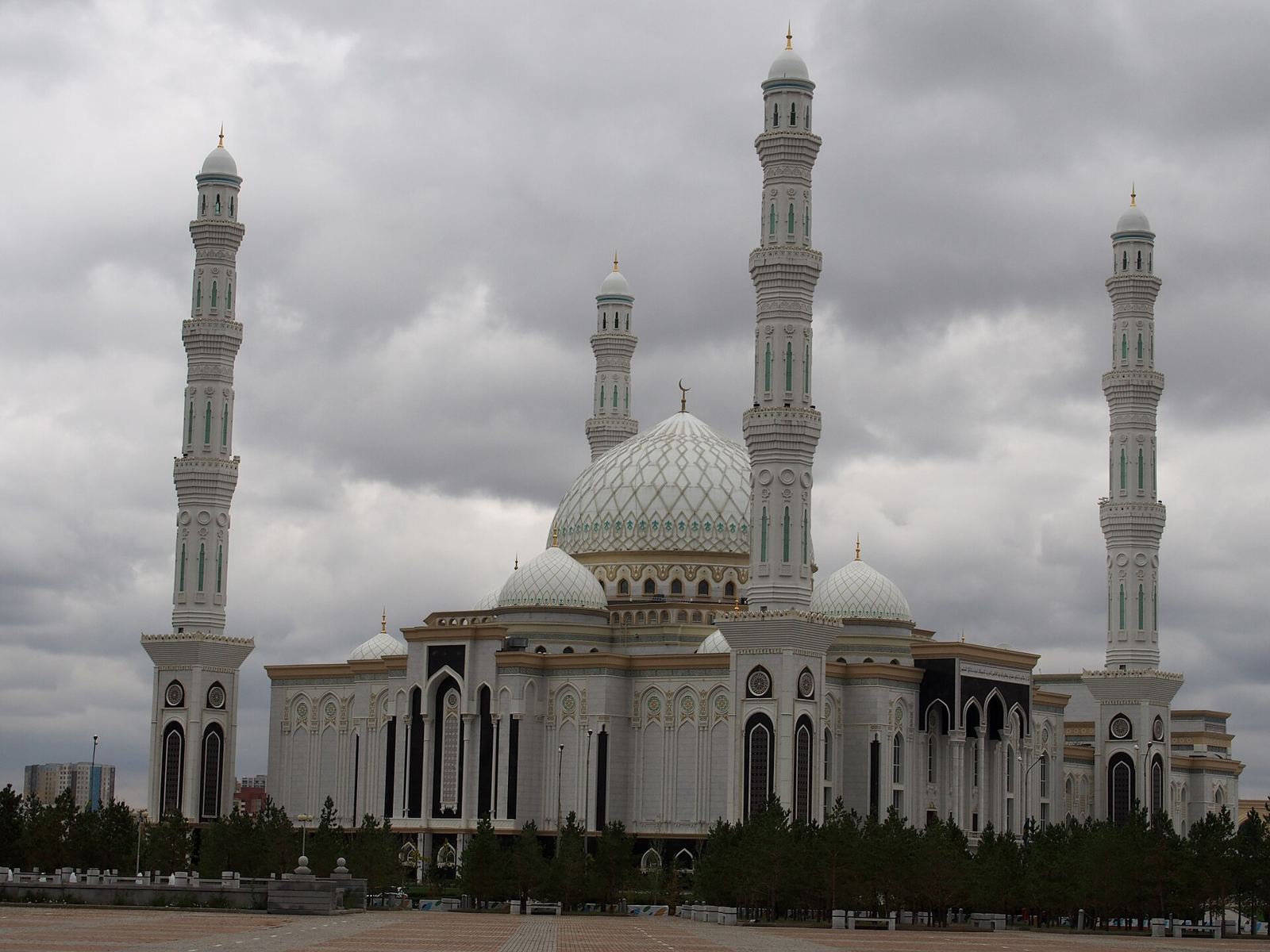
About 69% of people in Kazakhstan identified as Muslim in the 2021 census, most of them Sunni, though religious practice ranges from fully observant to mostly cultural, and pre-Islamic beliefs about nature, ancestors, and sacred places still surface in everyday customs.
From the 18th century onward, Kazakh lands were gradually absorbed into the Russian Empire, and later into the Soviet Union. The Soviet period reshaped the country profoundly: forced collectivization in the 1930s caused devastating famine, nomadic life was dismantled, and the population was altered by deportations of other peoples to Kazakhstan and by Russian migration. At the same time, the Soviet era built cities, railways, universities, and industries, and left the Russian language as a second lingua franca alongside Kazakh.
This dual heritage is visible in almost every Kazakh city — Orthodox cathedrals near mosques, Soviet-era apartment blocks beside modern glass towers, Kazakh and Russian heard in the same conversation.
Since independence in 1991, Kazakhstan has worked to put Kazakh identity at the center of public life while remaining multi-ethnic and multi-religious. Nauryz, the spring equinox festival, is a national holiday again. Kazakh is the state language and is gradually transitioning from Cyrillic to a Latin-based script. Contemporary music, film, literature, and design increasingly draw on nomadic themes without treating them as museum pieces.
The contemporary scene is lively and increasingly confident. Kazakh-language pop and hip-hop fill the charts, and singers such as Dimash Qudaibergen have large followings abroad. Almaty has a growing gallery and design scene, Kazakh cinema regularly appears at international festivals, and ethno-style fashion reworks felt, embroidery and ornament for everyday clothes. Almaty and Astana have busy concert, opera and theatre calendars, while traditional music and dance are easiest to catch at Nauryz, weddings and folk-ensemble performances.
For travellers this means you can watch a traditional horse-game in the afternoon and eat sushi in a design-led café in the evening, and both are equally part of the country today.
Kazakh culture grew out of nomadic herding life on the steppe, so hospitality, respect for elders, family lineage and the horse are at its heart. On top of that sit Silk Road Islam, a strong Russian and Soviet influence and a multi-ethnic population, which is why modern Kazakhstan feels both Central Asian and European.
According to the 2021 census, ethnic Kazakhs make up about 70% of the population and Russians about 15%, with Uzbeks, Ukrainians, Uyghurs, Germans, Tatars, Koreans and more than a hundred other groups making up the rest.
Kazakh is the state language and Russian has official status and is widely used, especially in cities and the north. English is spoken mainly by younger people and in tourism.
Islam. About 69% of people identified as Muslim and about 17% as Christian in the 2021 census, but Kazakhstan is a secular state with no official religion.
If you only have time to read one cultural page before your trip, start with Traditions & Customs — it covers hospitality etiquette that you'll actually use. If you're planning meals, go to Traditional Cuisine. For context on monuments and museums, History is the essential companion. And for a handful of phrases that earn real goodwill, see Language Basics. If your trip includes Turkestan or the Mangystau shrines, read Religion in Kazakhstan first for the etiquette at sacred sites.