
Photo: Tore Khan / CC BY 2.0
Big Almaty Lake
Last reviewed on 29 September 2026
Turquoise Jewel of the Tian Shan Mountains
Big Almaty Lake sits at an altitude of 2,511 metres in the Trans-Ili Alatau, 28 kilometres south of Almaty — close enough to reach in an hour, high enough that the air and the light are completely different from the city below. Its colour is the reason most people come: the lake runs from milky turquoise to deep indigo depending on the season, the hour and the angle you stand at.
Formed by an ancient moraine dam, the lake stretches 1.6 km long and 1 km wide, reaching depths of up to 40 meters. The lake serves as part of Almaty's water supply system, making it a crucial resource and strictly protected area. Despite restrictions on swimming and close lake access, Big Almaty Lake remains one of the most popular day trips from Almaty, offering spectacular scenery, mountain hiking opportunities, and world-class photography.
Big Almaty Lake Map and Location
The lake lies in Ile-Alatau National Park at the head of the Big Almaty gorge, about 28km south of central Almaty and close to the Kyrgyz border ridge, at roughly 43.05°N, 76.99°E. The gorge road climbs past a national park checkpoint to the dam at the northern end of the lake, then continues up towards the observatory and the Cosmostation. Open Big Almaty Lake on OpenStreetMap.
Altitude, Size and Why the Colour Changes
Big Almaty Lake lies at 2,511 metres above sea level, held back by an ancient moraine dam. It is roughly 1.6km long and 1km wide, up to 40 metres deep, and the peaks immediately around it rise past 4,000 metres — so the surface sits about 1,700 metres above central Almaty. That gain is enough to drop the temperature by 10–12°C against the city on the same afternoon, and enough that visitors who come straight up from the plain sometimes notice mild breathlessness on the walk from the car park.
The colour comes from rock flour: glacial meltwater carries suspended silt so fine that it stays in the water column and scatters light back at the blue-green end of the spectrum. How much silt is in the water decides the shade, which is why the lake is not the same colour twice:
- May–June: peak melt, maximum silt load, the milkiest and most vivid turquoise
- July–August: fuller and deeper blue-green, warmest and busiest
- September–October: silt settles out, the water darkens to deep blue and reflects the peaks cleanly
- Winter: frozen and snow-covered, no colour at all — come for the white amphitheatre instead
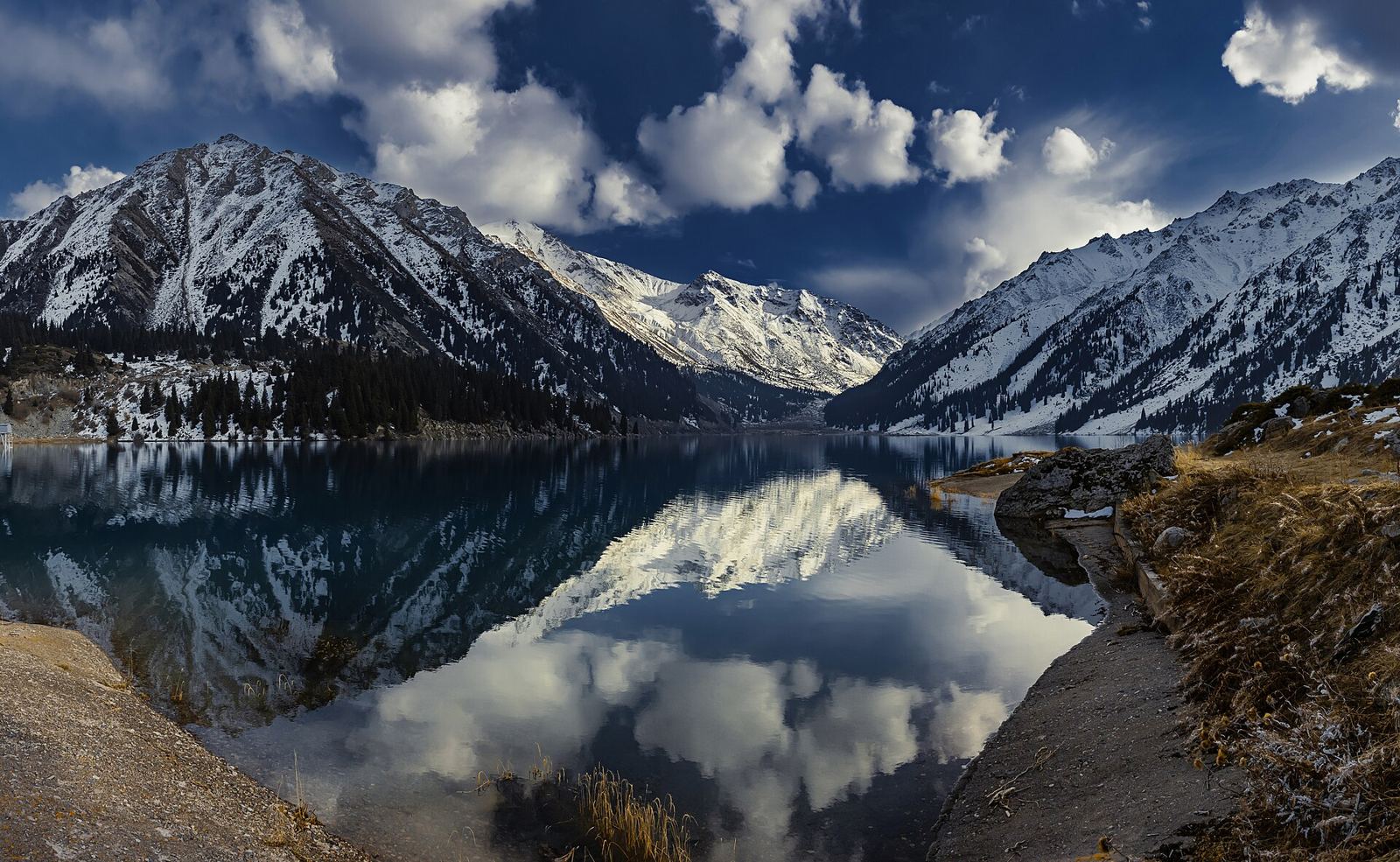
Overcast days flatten the colour badly. If the lake is the point of your trip, go on a clear morning before the afternoon cloud builds over the ridge, then put Shymbulak and Medeu in the afternoon — our guide to day trips from Almaty sets out how the routes combine.
The Surrounding Peaks
Sovetov Peak (4,317m)
The tallest peak surrounding the lake, dominating the southern skyline. Snow-covered year-round, it creates a dramatic backdrop for photographs. Popular with experienced mountaineers for summer climbs.
Ozyorny Peak (4,110m)
Located to the southeast, this majestic peak offers technical climbing routes. Its glaciers feed into the lake, contributing to the water's distinctive turquoise color.
Tourist Peak (3,954m)
The most accessible of the surrounding summits, popular with hikers and trekkers. The approach offers spectacular views of both the lake and Almaty valley below.
Best Hikes Near Big Almaty Lake
The lake is the starting point for some of the best high-altitude walking within an hour of Almaty. From easiest to hardest:
- Lake viewpoints (easy, 1–2 hours): walk the road and the slopes above the dam for the classic views down onto the water. Stay on the paths; you cannot walk down to the shore.
- Tien Shan Astronomical Observatory (moderate, half day): follow the road uphill beyond the lake to the observatory, with views back over the whole lake and the peaks around it.
- Cosmostation (moderate to hard, full day): the road continues to the Cosmostation, a high-altitude research station at around 3,300m near the Zhusalykezen pass. The air is noticeably thin, so go slowly.
- Big Almaty Peak, 3,681m (hard, full day): a steep, popular summit hike with a view over the lake on one side and Almaty on the other. Start at dawn, carry plenty of water and turn back if the weather closes in.
- Tourist Peak, 3,954m (hard): a longer, higher climb for fit, acclimatised hikers, best with a guide.
Snow can cover the higher trails until June and return in September. If you are coming from sea level, spend a day or two in Almaty first, and see our health and safety advice before going high. For other walks close to the city, see Shymbulak and Medeu.
Weather and Visiting in Winter
At 2,511m the lake is usually 10–12°C colder than Almaty. Typical conditions:
- Summer (June–August): days around 15–20°C, cold nights, frequent afternoon cloud and storms
- Autumn (September–October): clear, crisp and stable; first snow usually by October
- Winter (roughly November–April): lake frozen and snow-covered, often -10°C to -20°C, strong wind
- Spring (May): ice breaking up, changeable weather, the lake slowly regaining its colour
Snow is possible in any month. A winter visit is worth it for the frozen white bowl of peaks, but the road can close after heavy snowfall and avalanche risk rises above the lake. Go on a clear day, check conditions before setting out, and bring proper winter clothing. See our Kazakhstan weather guide for Almaty itself.
Things to Do
Photography
Capture the stunning turquoise lake against dramatic mountain peaks. The color varies from bright turquoise to deep blue depending on season, time of day, and weather. Golden hour provides the best lighting.
Mountain Hiking
Multiple trails ranging from easy viewpoint walks to challenging peak ascents. The Cosmic Station Observatory trail offers panoramic views. Experienced hikers can attempt Tourist Peak (3,954m).
Wildlife Watching
Spot Tian Shan brown bears, ibex, marmots, and golden eagles in their natural habitat. Early morning and late afternoon are best for wildlife sightings. Always maintain safe distances.
Observatory Visit
Visit the Tian Shan Astronomical Observatory, located high above the lake. Built in 1957, it remains active for scientific research and offers incredible mountain views.
Mountain Picnicking
Find designated picnic areas with stunning lake and mountain views. Pack a lunch and enjoy the fresh alpine air. Remember to take all trash with you to preserve this protected area.
Seasonal Experiences
Each season offers unique beauty: summer wildflowers, autumn golden aspens, winter frozen landscapes, and spring avalanche waterfalls. The lake's color is most vibrant in summer and early fall.
Practical Information
Getting There
- Distance: 28km from Almaty city center
- Drive time: 45-60 minutes via winding mountain road
- Taxi: Yandex Go or inDrive; roughly 5,000–8,000₸ one way. Agree a return pick-up in advance, as signal is patchy and cars are scarce at the lake
- Tours: Many operators offer half-day and full-day tours
- Car rental: no 4WD needed in summer, but rules on private cars in the upper gorge change; check at the park gate
- Public transport: limited; city buses only reach the foot of the gorge, leaving a long uphill walk, so most people use a taxi or tour
Best Time to Visit
- Summer (June-August): Warmest weather (15-20°C), greenest scenery, most vibrant lake color
- Fall (September-October): Golden foliage, crisp air, excellent visibility, fewer tourists
- Winter (November-April): Frozen lake, snow-covered peaks, often -10 to -20°C, road may close
- Spring (April-May): Melting snow, waterfalls, unpredictable weather, road conditions vary
Important Rules & Safety
- No swimming: Strictly prohibited (drinking water source)
- Stay on trails: Protected ecological zone
- No littering: Carry out all trash, heavy fines for violations
- Altitude: Take it slow, stay hydrated
- Weather: Changes rapidly, bring layers
- Wildlife: Never feed animals, maintain safe distances
- Winter access: Road may close during heavy snow
What to Bring
- Warm jacket (temperatures 10-15°C cooler than Almaty)
- Sun protection: hat, sunscreen (SPF 50+), sunglasses
- Camera with extra batteries (cold drains them quickly)
- Sturdy hiking shoes with good traction
- Water (2L+ per person) and energy snacks
- Rain jacket or windbreaker
- Binoculars for wildlife and peak views
- Cash (no ATMs; Ile-Alatau National Park entry fee at the checkpoint)
Big Almaty Lake: Questions Travellers Ask
What is the altitude of Big Almaty Lake?
Big Almaty Lake is at 2,511 metres above sea level, about 1,700 metres higher than central Almaty. The peaks around it rise above 4,000 metres, the highest being Sovetov Peak at 4,317m.
Where is Big Almaty Lake and how do you get there?
It is in Ile-Alatau National Park, about 28km south of central Almaty up the Big Almaty gorge, at roughly 43.05°N, 76.99°E (see the map). The drive takes 45–60 minutes by taxi, tour or hire car. Rules on private cars in the upper gorge have changed in recent years, so check at the park gate before you go.
Can you swim in Big Almaty Lake?
No. The lake is part of Almaty’s drinking-water supply, and swimming, and even walking down to the water in places, is prohibited. Rangers do fine people. The views are from the road and the slopes above the shore.
Is Big Almaty Lake worth visiting in winter?
Yes, if you want snow rather than colour. From roughly November to May the lake is frozen and white, surrounded by snowy peaks. The road can close after heavy snowfall and avalanche risk rises above the lake, so go on a clear day after checking conditions, and bring proper winter clothing.
What are the best hikes near Big Almaty Lake?
The easy option is walking the road and slopes above the dam for the classic viewpoints. More energetic hikers continue up to the Tien Shan Astronomical Observatory above the lake, or further to the Cosmostation at around 3,300m. Fit, acclimatised walkers can climb Big Almaty Peak (3,681m) in a long, steep day. Go with a guide for anything above the observatory.
What is the weather like at Big Almaty Lake?
Usually 10–12°C colder than Almaty. In summer, days are typically 15–20°C with cold nights and frequent afternoon cloud or storms. Snow is possible in any month, and in winter temperatures often fall to between -10°C and -20°C. Clear mornings give the best colour and views.
Is there an entry fee for Big Almaty Lake?
The lake is inside Ile-Alatau National Park, which charges a modest entry fee per person and per vehicle at the checkpoint on the gorge road. Rates change, so carry some cash.


